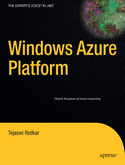

Windows Azure Platform
Author: Tejaswi Redkar
|
Windows Azure is being established as the most competent and compact operating system from Microsoft for cloud-based systems. Azure serves as the most effective and efficient development, execution and management environment for cloud services and applications. Windows Azure provides developers with on-demand compute and storage resources to develop, host, scale, and manage a variety of cloud applications through Microsoft datacenters. Windows Azure is a flexible and futuristic platform that supports multiple languages and easily integrates with existing on-premises platforms. To build applications and services on Windows Azure, developers can use their existing Microsoft Visual Studio expertise. In addition, Windows Azure supports popular standards and protocols including SOAP, REST, XML, and PHP. Windows Azure offers several benefits to developers, small and medium enterprises and independent service providers in building, deploying, and delivering online, on-demand, and remote cloud services. The platform offers dynamic provisioning, scale-up and down capabilities. Use Windows Azure to:
Azure comprises four core components—Windows Azure, .NET Services, SQL Services, and Live Services—each with a unique role in the functioning of cloud service. The goal of this book is to show us how to use these components, both separately and collectively, to build flawless and fruitful cloud services. The author has started his long innings with a fluent and free-flowing chapter on cloud services. The second chapter dissects the Azure platform further in order to explain each module’s features and functionalities. He has explained in detail all kinds of application types that can immensely benefit out of this cloud platform. The chapters thereafter fully focus on the core modules deeply and their central functionalities in a simple and structured manner using lavishly flowing visuals. The author has explained in an immaculate manner about the nitty-gritty of building robust and resilient cloud-based web applications out of this platform. A lot of helpful tips, codes, visuals and other resources are found in plenty in this book towards streamlining and for simplifying the increasing workload of developers. How cloud services can be deployed, configured, administrated, monitored, governed and enhanced are being vividly described. In a nutshell, this is a down-to-earth, informative and code-centric book on Azure platform. The Key Takeaways
Pethuru Raj, PhD Home Page: www.boschresearch.com |